Multiplication via Addition, a key concept in understanding Collatz Conjecture
Binary 1x+2x=3x
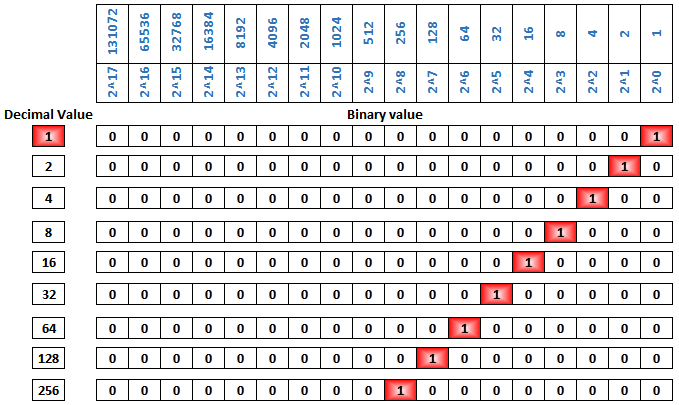
Understanding 1x+2=3x works in binary is the key to processes involved in Collatz. Dissecting the multiply by 3 into a simple addition problem provides a most important visualization of unseen processes which make Collatz work. To see its importance, understanding 2x is vital. In the below diagram, take note of the value of 1 each time it is multiplied by 2. The effect is a simple left shift of 1 bit position, appending a 0 behind it.
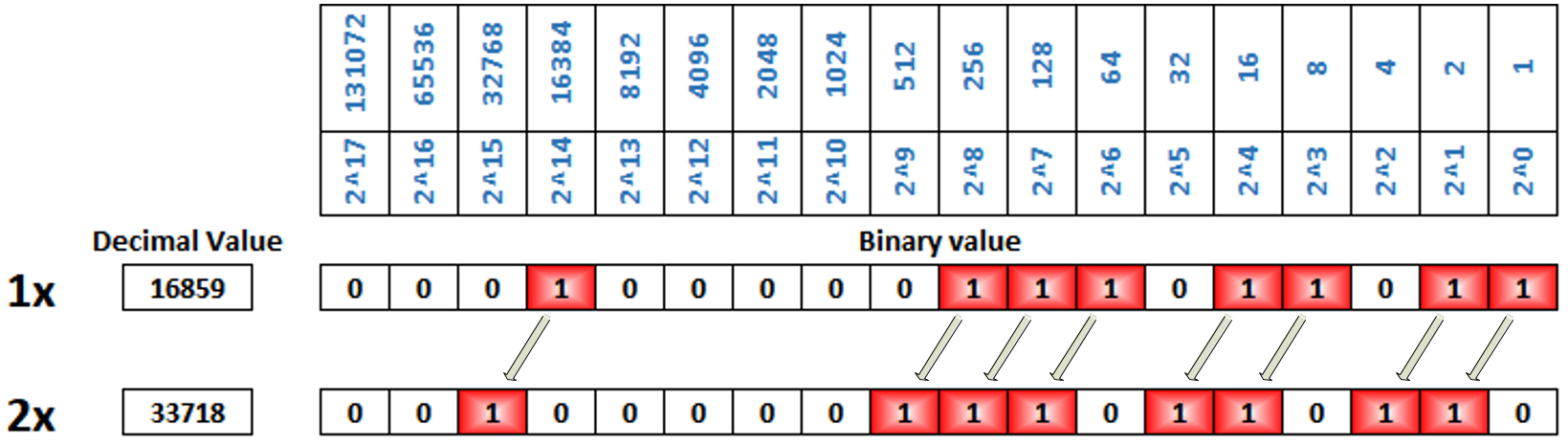
Now look at a more complex number such as 16859. See how the entire pattern of 16859 simply shifts left 1 bit position when multiplied by 2. Now examine the symbiont nature
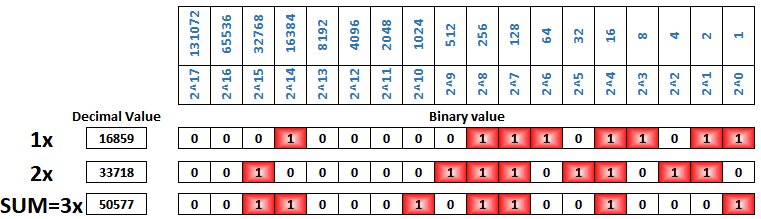
Now look at the sum of 1x+2x and how it got there.
Below is where binary and 1x+2x=3x really provides the visualization of why Collatz works like it does. It shows why Collatz must be viewed in binary. 597 in decimal seems an innocent number. But in binary, it becomes iniquitous. When the last 8 bits of the 597 are stacked over 2*597, it sets up a perfect storm for the plus 1 function which follows the Collatz 3x. Then follows the Collatz divide by 2 until odd. Or in this case, just divide by 256 (28).
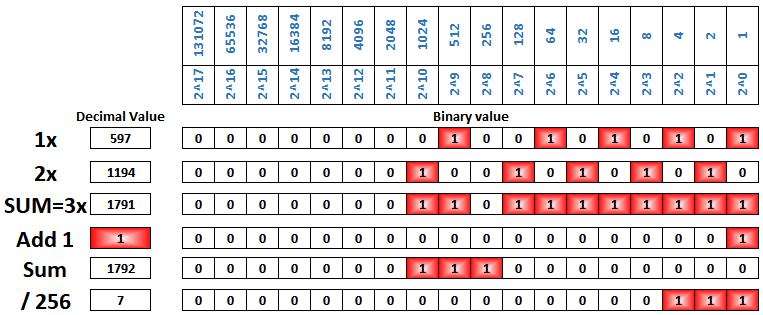
This leads to the chapter on 4x+1, where it is proven 597 = 2. in a Collatz world.
Hint:
2 (Root)
2*4+1=9
9*4+1=37
37*4+1=149
149*4+1=597
{2, 9, 37, 149, 597, 2389, 38229, … 4x+1} all fall to 7 on the next Collatz iteration.